Gutters, Downspouts and Grading: The Cheapest Flood Prevention
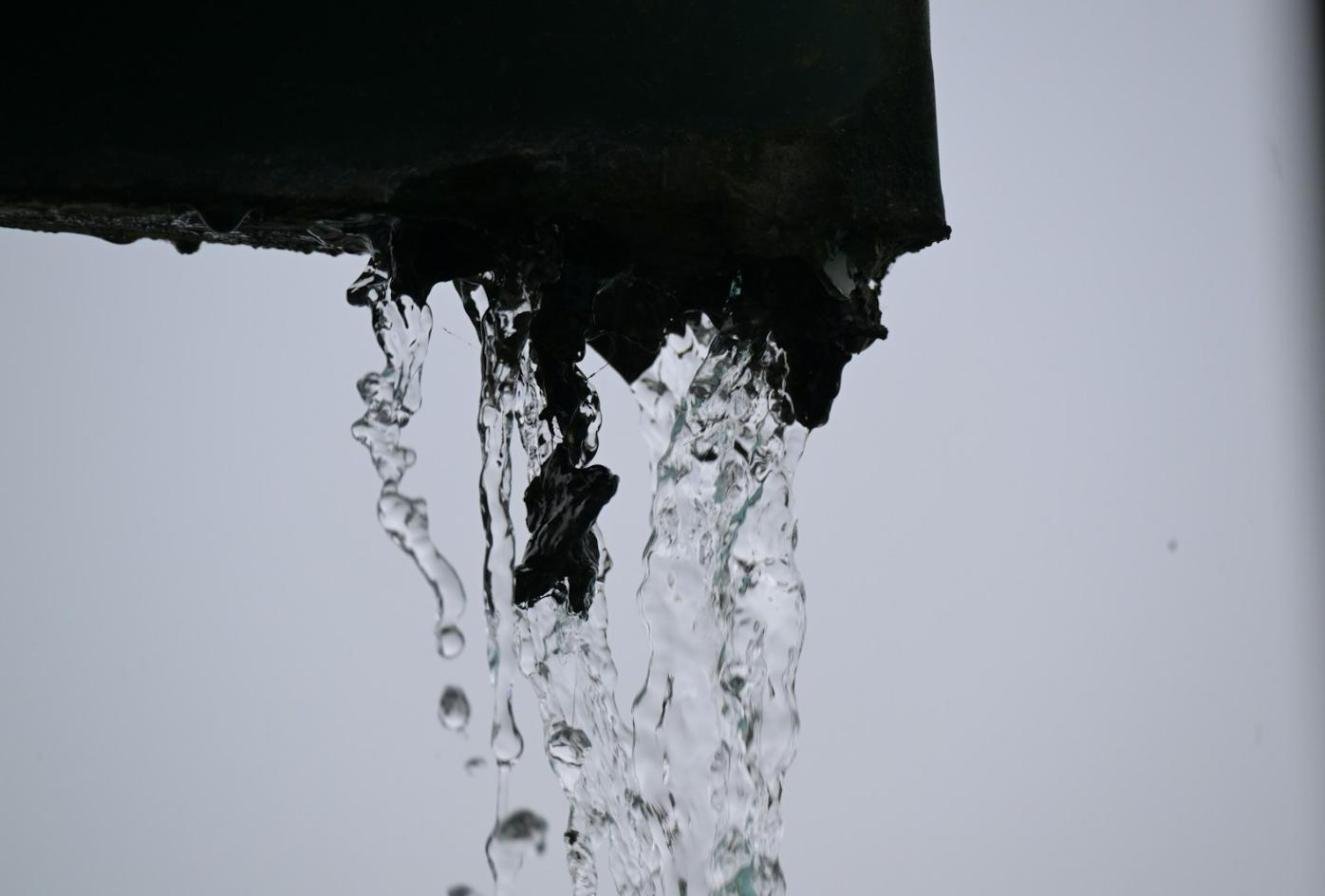
Fixing your downspouts and grading is the cheapest way to stop basement water, because most of the water that reaches a foundation wall started as rain on the roof. Send each downspout at least 1.8 metres, or six feet, away from the house, and slope the soil so water runs away from the wall. A few extensions and a load of soil cost far less than any repair made after the water is inside.
How downspouts and grading cause basement water
A roof collects a surprising amount of water. Every millimetre of rain on every square metre of roof ends up in the eavestroughs, and each downspout releases its share in one spot. If that spot is right at the corner of the house, the soil there saturates within minutes. The backfilled soil beside a foundation is looser than the undisturbed ground further out, so water sinks down along the wall and finds cracks, joints and the gap where the wall meets the footing.
The London area has a lot of clay in its soil. Clay drains slowly, so water that soaks in beside the wall tends to stay there. Clay also shrinks in dry summers and pulls away from the foundation, leaving a gap that channels the next rain straight down. Surface drainage matters more here than in sandy areas.
Gutters: keep the water in the system
- Clean eavestroughs at least twice a year, in late spring after the seeds drop and in fall after the leaves are down. Homes under mature trees need it more often.
- Run a hose in the trough and watch. Water should flow steadily to the downspout without pooling. Standing water means the slope is off or a hanger has pulled loose.
- Look for joints and end caps that drip, and reseal them with gutter sealant.
- Check that the trough sits tight under the roof edge so water does not run behind it and down the fascia.
- Flush each downspout with the hose. If water backs up, clear the elbow at the bottom, where most clogs sit.
- Look for staining or splashed soil on the wall below the eaves. Both are signs of overflow.
How far should downspouts discharge from the house?
A good target is at least 1.8 metres from the foundation, and further is better if the yard allows. A short splash block alone is rarely enough. Use a rigid extension, a hinged one that flips up for mowing, or a buried solid pipe that carries the water to a lower part of the yard.
- Aim the outlet at ground that slopes away, so the water keeps moving once it leaves the pipe.
- Keep discharge on your own property. Do not send it onto a neighbour's lot, across a sidewalk or onto a driveway where it will freeze.
- Avoid ending an extension beside a window well or against a walkway that slopes back to the house.
- In older homes, look at where the downspouts go. Some run straight into a pipe in the ground that connects to the weeping tile or sewer. That loads the foundation drains with roof water. Ask your municipality about disconnecting them and redirecting the flow onto the lawn.
How to check and fix the grading
The ground should fall away from the house on all sides. A common rule of thumb is a drop of about 15 centimetres over the first three metres. Soil settles over the years, especially the backfill beside the foundation, so a yard that was graded properly when the house was built can slope the wrong way a decade later.
- Walk around the house during a steady rain. Note anywhere water pools within a couple of metres of the wall or runs toward it.
- Check the slope with a long level or a straight board and a tape measure, working outward from the foundation.
- Build up low areas with dense, clay-based fill, packed down in layers. Topsoil and mulch alone soak up water like a sponge and hold it against the wall.
- Keep the soil at least 15 to 20 centimetres below the top of the foundation and below any siding or brick weep holes.
- Finish with a thin layer of topsoil and grass or ground cover to stop erosion.
- Look at hard surfaces. A patio, walkway or driveway that has settled and tilts toward the house needs to be lifted, re-laid or sealed at the joint with the wall.
Window wells, gardens and other weak points
Window wells should have clean gravel in the bottom, a rim that sits above the surrounding soil, and a clear cover if they collect rain or roof drip. Raised garden beds against the house can hold water at the wall, particularly when edging traps it. Keep beds sloped outward and avoid heavy watering right beside the foundation.
When surface fixes are not enough
If the basement still takes in water after the gutters, downspouts and grading are right, the cause may be a foundation crack, failed weeping tile or a high water table. Those need a waterproofing or drainage contractor. Dampness that has been getting into finished walls for a while should be checked with a moisture meter before it is covered up again.
Start during the next steady rain. Put on a coat, walk once around the house, and watch where each downspout's water goes. Fix the worst one first.
Common questions
Are buried downspout drains better than surface extensions?
They look tidier and stay out of the way, but they can clog or freeze where you cannot see. If you bury a line, use solid pipe with a steady slope, a cleanout, and an outlet you can check.
Do gutter guards mean I never have to clean the gutters?
No. Guards cut down on large debris, but fine material still gets through and the tops need to be brushed off. Plan to inspect them at least once a year.
Can I regrade around my house myself?
Filling low spots beside the foundation is a reasonable homeowner job with a wheelbarrow and a tamper. Larger changes that redirect water across the lot or toward a neighbour may need professional design and municipal approval.
Send photos, get a firm quote in 2 hours
Three photos from your phone is enough for most jobs. No obligation.