Can Wet Drywall Be Saved?
Yes, wet drywall can be saved in many cases. If the water was clean, the board is still firm and flat, and drying starts within about a day or two, drywall can be dried in place and will be as sound as before. If the water was dirty, the board has gone soft or sagged, or it stayed wet for days, it needs to come out.
What water does to drywall
Drywall is a core of gypsum pressed between two sheets of paper. The gypsum itself handles a short soaking fairly well and regains most of its strength when it dries. The weak points are the paper and time.
The paper is what holds the sheet together, and it is also food for mold. Wet paper in a warm house can start to grow mold in as little as a day or two, usually on the back face first, where it is dark and the air is still. Long soaking also breaks down the bond between paper and core. Once that goes, the board swells, softens and never returns to its original shape.
When can wet drywall be saved?
A wall or ceiling is a good candidate for drying in place when all of these hold:
- Clean source. The water came from a supply line, a tap, a water heater or rain through a fresh opening. It did not come from a drain, a toilet overflow with waste, a sewer backup or ground flooding.
- Short exposure. Drying begins within roughly 24 to 48 hours of the leak.
- Still solid. The board is flat and firm. It does not dent under thumb pressure, and screws and seams have not let go.
- No sign of mold. No spotting, no musty smell from the cavity.
- The cavity can dry. There is no soaked insulation or vapour barrier trapping water behind it. Interior partition walls usually pass this test. Exterior walls often do not.
- Readings respond. Once equipment is running, the moisture readings drop day over day.
Signs wet drywall cannot be saved
- It is soft, spongy or crumbly, or your finger leaves a dent.
- It has swelled, bulged or pulled away from the studs.
- A ceiling is sagging or pillowing between the joists.
- The water was contaminated, whatever the board looks like.
- There is visible mold on either face.
- It has been wet for several days, or nobody knows for how long.
- Wet insulation is sitting behind it.
- After a few days of proper drying, the readings have stalled.
When a wall fails these tests, the usual approach is to remove only the wet lower portion in a straight line and leave the dry board above it.
Ceilings are a special case
A wet ceiling is carrying weight a wall is not. Water pools on top of the board, the board gets heavy and the fasteners are pulling straight down through softened gypsum. A ceiling that is bulging can come down without warning. Keep people out from under it. If it is safe to reach, a small hole at the lowest point of the bulge with a bucket underneath lets the water out and takes the load off.
A ceiling with a stain and no sag, from a one-time overflow above, often dries fine. One with insulation sitting on it, such as a top-floor ceiling below the attic, holds water much longer and needs to be checked from above as well.
How drywall is dried in place
- The wet area is mapped with a moisture meter and marked, so there is a clear record of where the water went.
- Baseboards come off. The gap they covered is where the wall is wettest.
- Small holes are made at the base of the wall, low enough that the baseboard will hide them later, to let air into each stud bay. On some jobs air is pushed into the cavity through those holes.
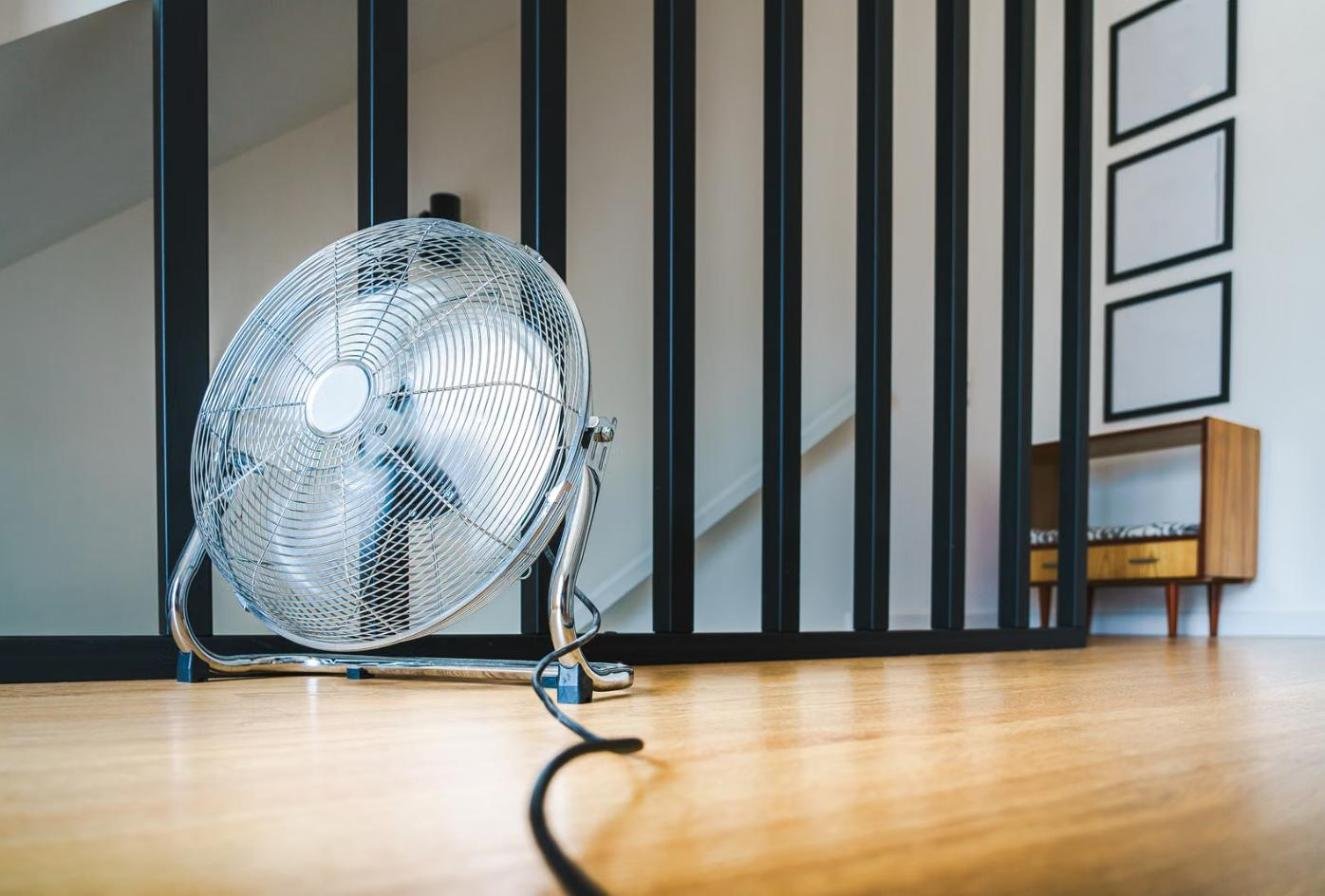
- Air movers are set along the wall and a dehumidifier pulls the moisture out of the room air.
- Readings are taken daily on the drywall and on the bottom plate behind it, until both match a dry area of the house and the framing is under 16 percent.
Wall coverings change the picture. Several coats of glossy paint, vinyl wallpaper and tile all slow drying by sealing the face of the board. Wallpaper usually has to be removed or perforated.
What saved drywall looks like afterwards
Dried drywall is structurally fine, though it may need cosmetic work. Expect some of these: a yellow or brown water stain, paint that has bubbled or peeled, joint tape that has lifted, or a slightly raised seam. Stains need a stain-blocking primer before repainting or they bleed back through. That finishing work belongs to a painter or drywall finisher once the wall has been confirmed dry.
Do not paint over a stain to make it go away before the wall has been checked with a meter. Paint seals moisture in and hides the one visible clue you had. If you have a wet wall right now, press on it gently, note whether it is firm, and write down when the leak happened. Those two facts decide most of what comes next.
Common questions
Is mold-resistant or green board drywall safe to keep after it gets wet?
It tolerates moisture better than standard board, but it is not waterproof and its cavity still holds water. Judge it by the same tests: clean water, firm board, fast drying and readings that come down.
How long does drywall take to dry out?
With commercial air movers and a dehumidifier, about three days is typical for board that is wet but sound. Left to dry by itself in a closed wall it can stay damp for weeks.
Will wet drywall always grow mold?
No. Drywall that is dried quickly and thoroughly usually does not. The risk climbs with every day it stays wet, and the hidden back side is where growth normally starts.
Send photos, get a firm quote in 2 hours
Three photos from your phone is enough for most jobs. No obligation.